
On desire, commitment, and the lives we don’t live
Most love stories move forward.
Two people meet. Something stands in the way. The question carries everything: will they choose each other? And when the answer comes, the world rearranges around it.
But there is another kind of story—quieter, harder to sit with—that doesn’t move like that at all.
Nothing is in the way.
No one is stopping them.
No catastrophe, no betrayal, no clean reason to walk away.
Just a life already in place. A partner. A history. Sometimes children asleep in the next room. A self that has been built slowly, deliberately, and not without cost.
And then something appears that doesn’t belong to that life—and doesn’t ask permission to matter.
Not dramatic. Not even necessarily overwhelming.
Just precise.
A conversation that lands a little too cleanly.
A way of being seen that feels… specific.
The unsettling ease of becoming a slightly different version of yourself in someone else’s presence—lighter, quicker, more awake than you’ve felt in a long time.
And the question isn’t what if we did this?
It’s worse than that.
It’s: what does it mean that this exists at all?
Four Films, One Emotional Territory
Some films return to this space with an accuracy that is almost difficult to tolerate. They don’t inflate the feeling. They don’t rescue anyone from it. They just stay.
In Brief Encounter, it’s a train station. Nothing remarkable on its own—just a place people pass through. Their conversations are polite, contained, almost careful. And yet everything that matters is happening underneath that restraint. When they part, it doesn’t feel like something was prevented. It feels like something was seen clearly—and refused anyway.
In In the Mood for Love, it’s the space between bodies. Hallways, shared meals, the choreography of almost-touching. They circle the feeling instead of entering it. And over time, the restraint stops feeling like absence. It becomes its own kind of intimacy—arguably more consuming than anything that could have been completed.
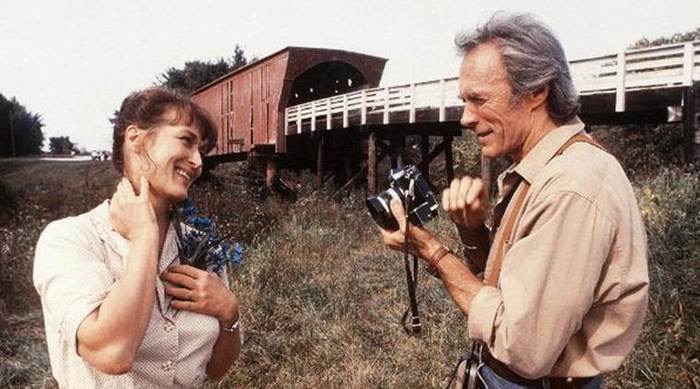
In The Bridges of Madison County, it’s a hand resting on a car door in the rain. Nothing external is stopping her. That’s what makes it unbearable. The life she could step into is right there, within reach of a small, ordinary movement. And she doesn’t move. Not because the feeling isn’t real—but because something else, equally real, holds.
In Past Lives, it’s later. Years later. The lives have already been chosen. And still, across a table, walking side by side, there is a recognition that doesn’t collapse into nostalgia or possibility. It just… remains. Not actionable. Not resolvable. Not gone.
Different stories. Different circumstances.
But they all return to the same, slightly unbearable truth:
Something can be real.
And still not become a life.
What You’re Actually Doing When You Watch
It feels passive. Like you’re observing something contained, aesthetic, safely outside your own life.
But that’s not quite true.
You’re not just watching the choice.
You’re rehearsing it.
For the length of the film, you step into a version of yourself that hasn’t decided yet. You let the feeling unfold without immediately organizing it into right and wrong, wise and unwise, possible and impossible.
And something in you responds.
Not abstractly—specifically.
You notice how quickly you orient toward the aliveness of it.
How natural it feels to lean in.
How little persuasion it takes to imagine a different configuration of your life—not as fantasy, but as something structurally plausible.
And then, almost in the same movement, something else comes into view:
What it would require.
Not just what you would gain—but what would have to be undone.
The conversations you can’t un-have.
The look on someone’s face that you would be responsible for.
The version of yourself you might not be able to return to once you cross that line.
And if you stay with it long enough—not turning away too quickly, not resolving it into a lesson—you reach a point that feels less like a decision and more like a limit.
You don’t step forward.
But it’s not clean.
Because the feeling doesn’t recede just because you’ve understood the cost.
The Part We Don’t Like to Admit
We tend to tell this story in a way that protects us.
We say: the feeling mattered, but the life I have matters more.
And often, that’s true.
But it’s not the whole truth.
There is usually a remainder.
A part that doesn’t align itself neatly with your values or your decisions. A part that—if you’re being exact—doesn’t fully agree with the choice you’ve made, even if you would make it again.
It doesn’t want to destroy your life.
It doesn’t even necessarily want to act.
But it resists being dismissed.
It holds onto the way you felt in that other presence. The version of yourself that came forward there. The sense—however fleeting—that something in you had more range than your current life regularly asks of you.
And that’s the uncomfortable edge of these stories.
They don’t just show you that you can choose not to act.
They show you that choosing not to act doesn’t always resolve the desire.
Why This Lands Harder in a Committed Life
In an unformed life, these moments are easier to metabolize. They become decisions, directions, stories you follow.
In a committed life, they don’t have anywhere obvious to go.
You’ve already chosen. Built something. Intertwined your life with another person’s in ways that are not theoretical.
So when something like this appears, the question is not:
Should I follow it?
It’s:
What do I do with the fact that part of me is moved by it?
Not in a fleeting way. Not in a way that disappears when ignored.
But in a way that reveals something about how you want to be seen, the kind of attention that changes you and the parts of you that have gone quiet in the life you’ve built.
These films don’t tell you to follow that thread.
But they also don’t let you reduce it to nothing.
They hold you in the more difficult position of knowing it’s real—and still choosing not to reorganize your life around it.
The Quiet After
When the film ends, nothing outward has changed.
Your life is still there, intact. The same rooms. The same person beside you, unaware of where you’ve just been.
But internally, something has shifted—and not in a way that resolves itself into clarity.
If anything, it’s more precise now.
You can feel exactly what it is:
The pull toward a version of yourself that doesn’t fully exist in your current life.
The recognition that it could have.
The knowledge that you are not going to pursue it.
And maybe also this, if you stay honest:
A flicker of grief that doesn’t quite justify itself.
Not because you made the wrong choice.
But because a different one was, in fact, possible.
Living With What We Don’t Choose
Some lives we don’t live.
Not because they were illusions. Not because they would have failed. But because living them would have required us to break something we decided—rightly or not—not to break.
And still, they don’t disappear.
They don’t stay as fantasies you indulge or regrets you replay. They become something quieter and harder to categorize.
Reference points.
Moments where you encountered a version of yourself that your current life doesn’t fully contain. Where you felt—briefly, sharply—another way of being alive.
These films don’t ask you to choose differently.
They do something more destabilizing than that. They remove the comfort of believing that the unlived life wasn’t real. And then they leave you where your actual life is: with the knowledge that it was, and that you turned away anyway.
Explore Further:
The Lives We Didn’t Live: How Choices Shape Character
What We Borrow From Films: Longing and Meaning When Life Leaves Little Room (+Free Resource)
Leave a Reply